
The American Library Association has added the audio and presentation files from many of the conference sessions to its ALA 2016 Annual Conference website. For librarians interested in library technology, there were four must-attend sessions and fortunately ALA has the audio for these four sessions. You’ll need to log in to the conference website to access them.
Linked Data – Globally Connecting Libraries, Archives, and Museums
Saturday, June 25, 2016 • 8:30 AM – 10:00 AM
Gordon Dunsire – RDA Steering Committee
Reinhold Heuvelmann – German National Library
Richard J. Urban – Florida State University
In the past years, libraries have embraced their role as global participants in the Semantic Web. Developments in library metadata frameworks such as BIBFRAME and RDA built on standard data models and ontologies including RDF, SKOS and OWL highlight the importance of linking data in an increasingly global environment. What is the status of linked data projects in libraries and other memory institutions internationally? Come hear our speakers address current projects, opportunities and challenges. Sponsored by the ALCTS International Relations Committee. Co-Sponsored by ALCTS/LITA Linked Library Data Interest Group.
The implementation of BIBFRAME and Linked Data is poised to revolutionize the access of scholarly articles and research data. This session covered some projects including an open database of Linked Data from the Deutsche Nationalbibliothek (German National Library), the Open Metadata Registry (OMR), and r-balls which contain “packages of data”—Linked Data and semantic Web representations of cultural heritage resources described using RDA.
Download the audio and presentation.
Executive Perspectives: A Strategic View of the Library Technology Industry
Saturday, June 25, 2016 • 10:30 AM – 11:30 AM
Marshall Breeding – Library Technology Guides
Sam Brooks – EBSCO
Matti Shem-Tov – Ex Libris
Skip Pritchard – OCLC
Jim Tallman – Innovative Interfaces
Sebastian Hammer – Index Data
Marshall Breeding, author of the annual Library Systems Report published in American Libraries, will assemble and moderate a panel of CEO or other senior executives representing organizations that produce software or services for libraries. Breeding will give a brief introduction and will then lead a lively discussion to probe at the technology and business trends currently in play, including industry consolidation, differing approaches to opening software to library programmers, and the shift toward cloud-based technologies. Panelists will be expected to candidly reflect the perspectives of their organizations, but not promote their products. The select panel will include representatives of organizations that produce commercial products, open source software, and will reflect for-profit and non-profit perspectives.
In this session, Marshall Breeding gathered executives from major library vendor companies and questioned them on topics including library vendor consolidation, comparative openness of their platforms, and more. The three ILS vendors took subtle jabs at each other, while OCLC emphasized their nonprofit model. Hammer took the opportunity to introduce an open library services platform (LSP) called FOLIO (of which we’ll have more soon).
Download the audio and presentation.
Library I.T.: Information Technologists or Information Thought-leaders?
Sunday, June 26, 2016 • 10:30 AM – 11:30 AM
Craig Boman – University of Dayton Libraries
Whitni Watkins – Analog Devices, Inc.
Library staff employed in information technology (I.T.) departments are often seen as support staff, only providing services when something breaks. But what more can library IT staff do to support the mission of their libraries? In this presentation we will explore why library IT staff should maximize their ability to work across various library departments to collaboratively design new library services rather than being relegated to support staff. We will also explore how library IT staff may challenge traditional bureaucratic organization structures to lead change efforts.
The speakers discussed the relationship of the library with its information technology staff (who may or may not be librarians). They recommended that library IT staff be should be proactive. “Don’t just wait around for problems to solve.” Library IT staff should seek out opportunities to learn what other library staff do and join teams to get more involved.
Download the audio and presentation.
LITA Top Tech Trends
Sunday, June 26, 2016 • 1:00 PM – 2:30 PM
Maurice Coleman – Harford County (MD) Public Library
Blake Carver – LYRASIS
Carolyn K. Coulter – PrairieCat Library Consortium, Reaching Across Illinois Library System (RAILS)
Nick Grove – Meridian Library District – unBound
Laura Costello, MLIS – Stony Brook University
Lauren Comito, MLS – Queens Library
This program features our ongoing roundtable discussion about trends and advances in library technology by a panel of LITA technology experts. The panelists will describe changes and advances in technology that they see having an impact on the library world, and suggest what libraries might do to take advantage of these trends. More information on Top Tech Trends: http://ala.org/lita/ttt
This was a huge session in one of the largest conference rooms. Panelists were asked to state their top tech trends in a word: concepts, real time, virtual reality, balance (security vs. access), and super-easy application development. “Library technology staff need to read vendor contracts to ensure privacy and security.” Tools libraries can use to encourage open everything include promotion, shifting academic attitudes, and institutional repositories. Panelists were asked about the Internet of Things: Useful or useless technology trend? “Security is key.” American Libraries posted a session summary on their blog.
Download the audio and presentation.
For more session audio and presentations, see our Library Technology at the ALA 2016 Annual Conference post and the official conference Full Schedule page.
 Before the BIBFRAME model began development, OCLC was already experimenting with Linked Data using the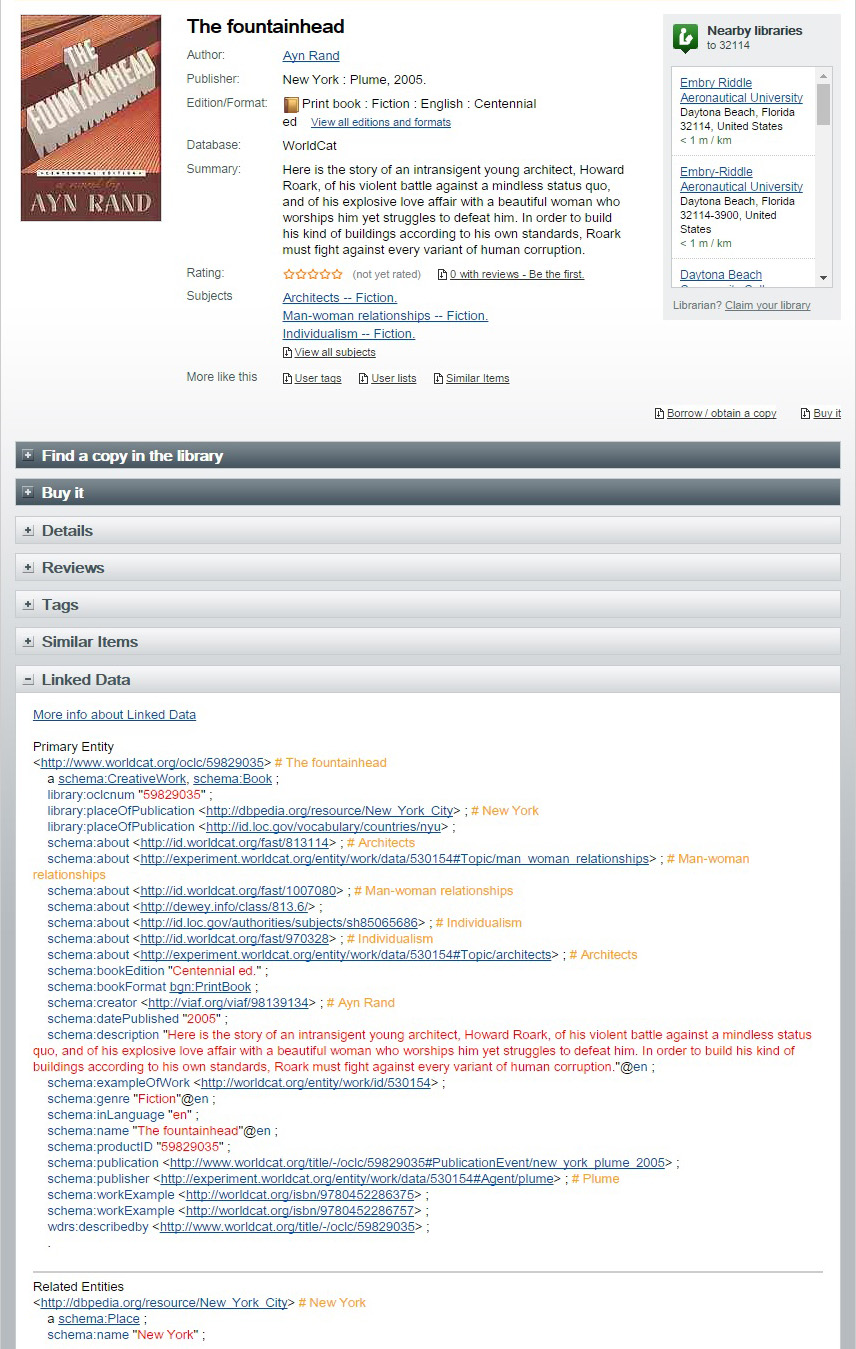
 BLUEcloud Visibility was announced in a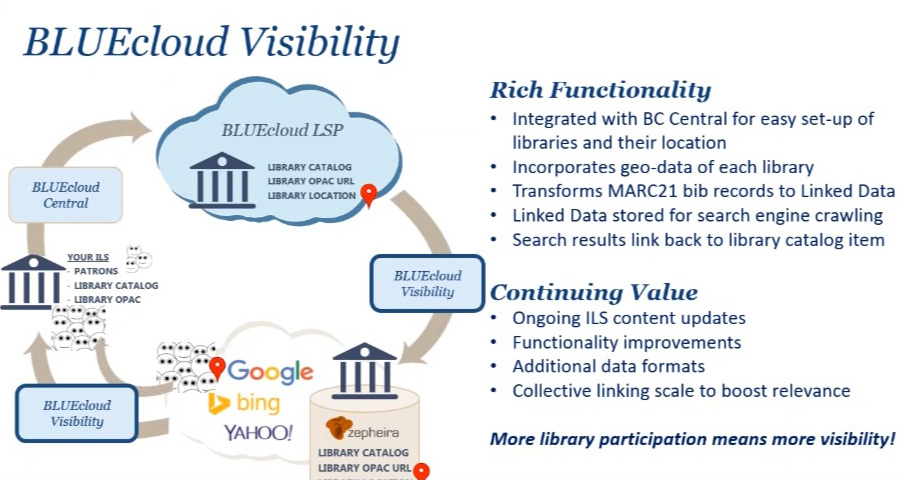
 Innovative Interfaces is an active sponsor of the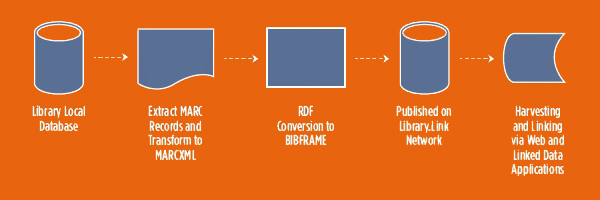
 In January, Ex Libris
 The BIBFRAME initiative was announced in an open letter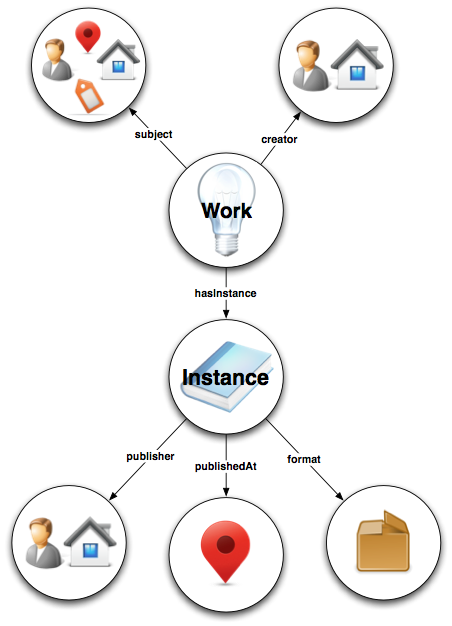
 This paper, undertaken on behalf of the Library of Congress, investigates how metadata of audiovisual material can be best handled using BIBFRAME. Sections cover preservation, structural, and technical metadata. Appendices give examples of video, audio, and film examples. Published in 2015, revised January 4, 2016.
 Straight from the source, this paper is an early look into the BIBFRAME model to introduce the subject and begin discussion. It covers the four classes (Creative Work, Instance, Authority, and Annotation) and vocabulary. The papers covers related initiatives such as OCLC’s WorldCat, Schema.org, RDA, and FRBR. Published in 2012.
 “This document describes a proposed alignment between BIBFRAME and a model being explored by OCLC with extensions proposed by the Schema Bib Extend project, a W3C-sponsored community group tasked with enhancing Schema.org to the description of library resources.” The paper also covers FRBR and gives examples of BIBFRAME in Turtle and RDF/XML syntax. Published in 2013.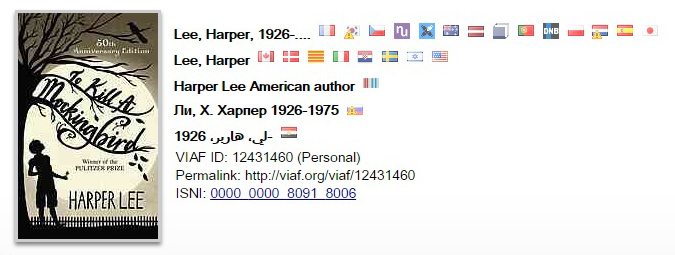
 The Virtual International Authority File (VIAF) is not a new service, but one that has become more prominent in recent times due to the direction of OCLC (starting in 2012) and the rise of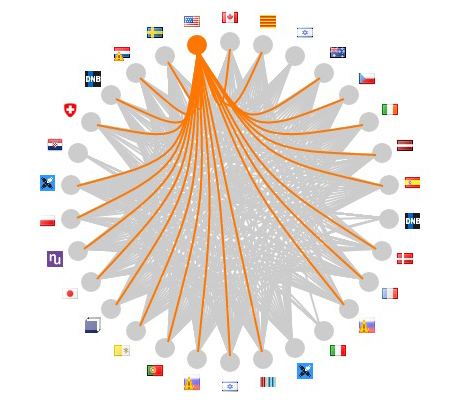
 “Jointly released by OCLC and the Library of Congress, this white paper compares and contrasts the compatible linked data initiatives at both institutions. It is an executive summary of a more detailed technical analysis that will be released later this year.” Published in 2015.
 Part of the “Synthesis Lectures on the Semantic Web: Theory and Technology” series. OCLC looks at Linked Data in cataloging and its products. Topics include authority records including VIAF, cataloging and FRBR, text mining, and the library Linked Data cloud. Published in 2015.
 This title is actually an issue of Library Technology Reports from ALA Tech Source. The report covers basic metadata in libraries and museums, Linked Open Data (LOD), case studies including BIBFRAME, and “issues, opportunities, and trends” in metadata. Published in 2013.
 In this book published by the American Library Association, the authors cover Linked Data and focus on the metadata standards supporting it. They present key concepts of metadata including metadata modelling, cleaning, reconciling, enriching, and publishing. Published in 2014.